Executive Summary
- Allergic rhinitis isn’t just a “nose problem”; it’s an overreaction of your immune system to harmless triggers.
- Environmental control (maintaining 50% humidity and killing dust mites) is your first line of defense.
- Consistent nasal irrigation and proper hydration can significantly soothe irritated mucous membranes.
“Did you use up a whole box of tissues today?”
If you clicked on this post, I know exactly how you feel. I remember those mornings where I’d wake up and sneeze ten times in a row before even hitting the bathroom. My nose would be raw, my eyes itchy, and my brain felt like it was wrapped in cotton. It’s honestly exhausting and frustrating when such a “small” thing dictates your whole day.
But here’s the thing: your nose isn’t trying to annoy you. It’s actually your immune system being a bit too overprotective. It sees things like pollen or dust and screams, “Intruder Alert!” This triggers the inflammation we know as rhinitis.

Why is my nose so dramatic? (The Root Causes)
While “allergies” is the broad term, there are specific triggers that usually pull the lever:
- The Invisible Roommates: Dust mites are the #1 culprit in most households. They love your bed just as much as you do.
- Temperature Shocks: Have you noticed your nose running the moment you step into a cold room? That’s your blood vessels reacting to the change.
- The Fine Dust Menace: Pollutants and fine dust act like sandpaper on your nasal lining, making it even more sensitive to other allergens.
Real-Life Management: What Actually Worked for Me
I spent hours digging through research papers and medical guidelines (like those from the AAAAI) to find what actually moves the needle. Here is what I found:
1. Turn Your Bedroom into a Sanctuary Since we spend a third of our lives sleeping, this is where the battle is won. Keep your humidity between 45% and 50%. If it’s too high, dust mites throw a party; too low, and your nose cracks. Also, wash your bedding in water at least 60°C (140°F) once every two weeks. When I first did this, I felt a noticeable difference within days. It was such a huge relief.
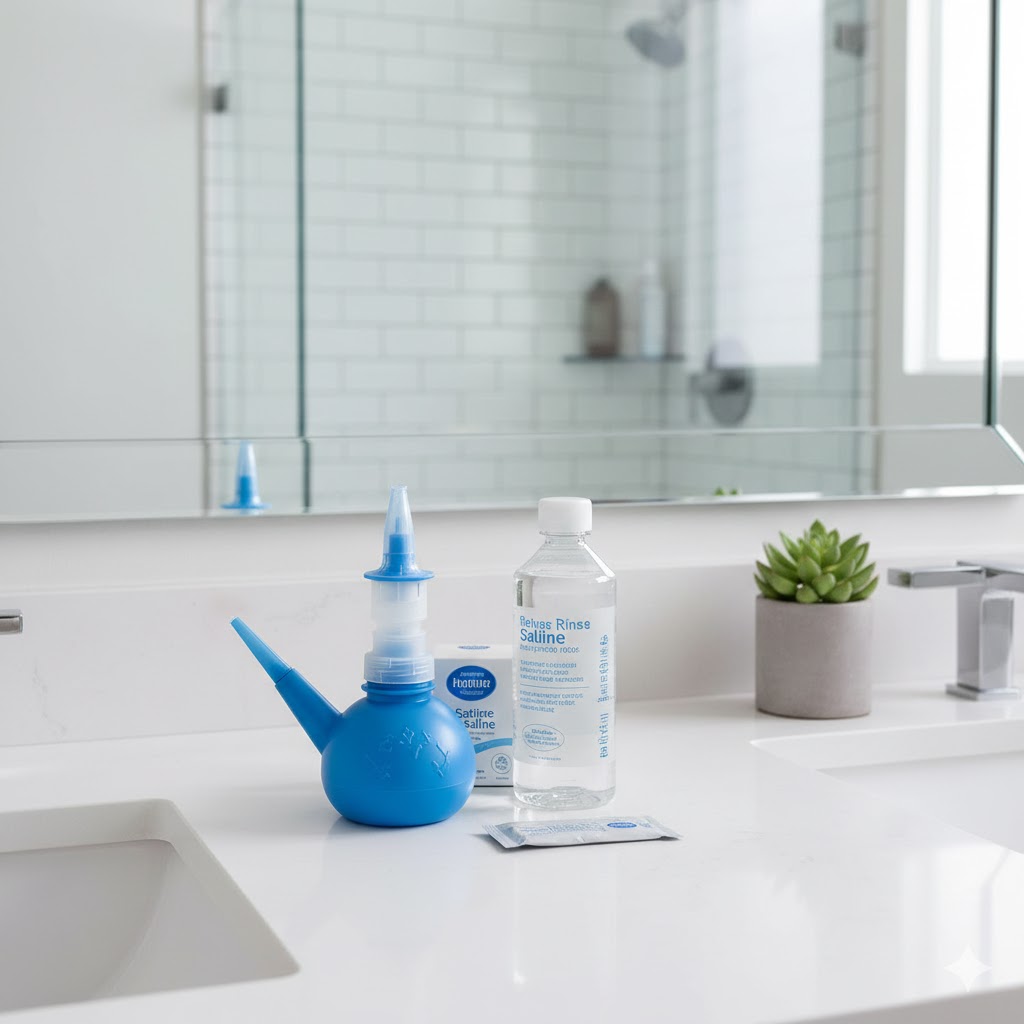
2. The Nasal Rinse (My Game Changer) I’ll be honest—I was terrified of the Neti pot at first. The thought of pouring water up my nose felt like drowning. But according to major clinical guidelines, flushing out the allergens physically is one of the most effective non-drug interventions. When I finally tried it with 0.9% sterile saline (warmed to body temperature), it wasn’t painful at all. It just felt… clean.
3. Respect the “Filter” Your nose is a natural air purifier. When it’s blocked, we tend to breathe through our mouths, which sends cold, unfiltered air straight to the lungs, worsening our condition. I found that staying hydrated helps keep the mucus thin, making it easier for the “filter” to do its job.
Red Flags: When to See a Professional
While lifestyle changes are powerful, please don’t ignore these signs:
- Your mucus turns thick, yellow, or green (this might be a sinus infection).
- You have a persistent fever or facial pain.
- Only one side of your nose is blocked for a long period.
Summary and Final Thoughts
There is no “magic pill” that makes allergic rhinitis vanish forever, but it is absolutely something you can manage and control. By taking charge of your environment and keeping your nasal passages clean, you can stop being a victim of the seasons. I used to carry a pack of tissues everywhere; now, I just carry the confidence that I can breathe clearly. Why not start by washing your pillowcases tonight?
3. FAQ (Frequently Asked Questions)
Q1. Can I just use tap water for my nasal rinse? Absolutely not.
This is dangerous. Tap water can contain parasites or bacteria that are safe to drink but deadly if they reach your sinuses. Always use distilled, sterile, or previously boiled water mixed with pharmaceutical-grade saline packets.
Q2. Does drinking herbal tea like peppermint help?
While it’s not a cure, the steam from hot tea helps moisturize your nasal passages, and peppermint contains menthol which can provide a temporary feeling of openness. It’s a great “comfort” routine!
Q3. Are air purifiers worth the money?
If you have a HEPA-filter purifier, yes. It’s great at catching pet dander and pollen. However, remember that it won’t catch dust mites living inside your carpet or mattress—you still need to clean those manually.
4. Recommended Reading
- Vitamin D Guide [LINK]
5. Disclaimer
“This content is provided for informational purposes only and is not intended as medical advice, diagnosis, or treatment. Always seek the advice of your physician or other qualified health provider with any questions you may have regarding a medical condition. Individual results may vary based on constitution and health status.”