“Did you fall down the algorithm rabbit hole again?”
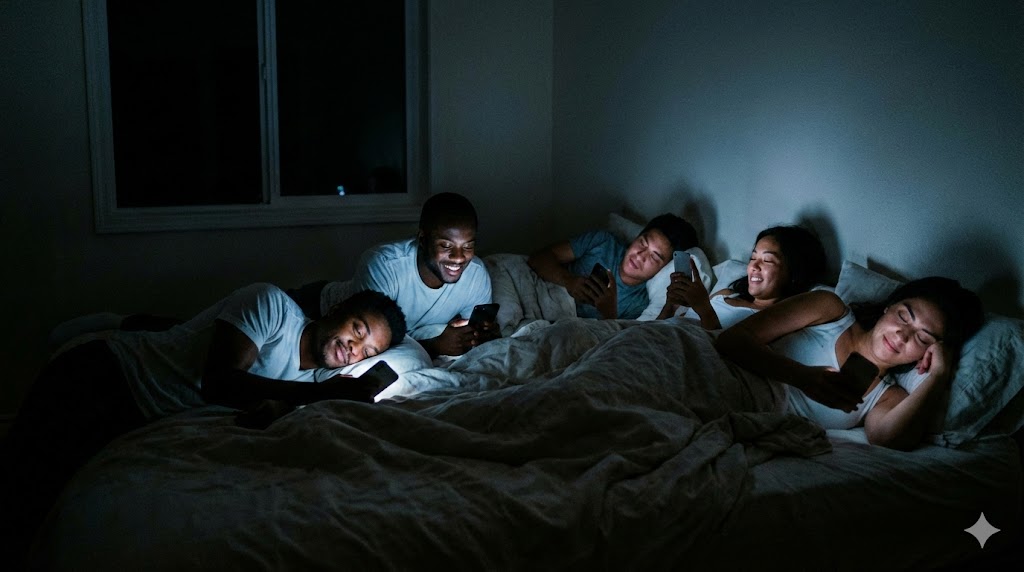
Let’s be honest with each other before we start. I used to be exactly the same. A few months ago, I would come home from work, throw my exhausted body onto the sofa, and instinctively grab the remote or open social media. I’d tell myself, “Just 10 minutes to decompress before a shower.” But the next thing I knew, two hours had vanished, and the clock was ticking past midnight.
You know that feeling, right? Your body is comfortable, but your mind feels strangely heavy. It’s that sinking feeling of guilt: “Ah, I wasted another evening.”
Is it because we lack willpower? Absolutely not. These platforms are engineered by some of the smartest people in the world specifically to keep our eyes glued to the screen. Today, I’m going to share the realistic, practical methods I used to cut down on meaningless screen time and use those hours to truly invest in “me”—not as a doctor, but as an editor who has walked this path.
1. Dopamine and Algorithms: Why Can’t We Stop?
If you think this is just a matter of “trying harder,” you’ve already lost the battle. To break a habit, you need to understand the enemy. Experts and neuroscientists point to one major culprit: the ‘Dopamine Feedback Loop.’
The Brain Craves “Newness”
Our brains release dopamine, a reward chemical, whenever we encounter new information. The problem is that flipping channels or swiping through YouTube Shorts triggers the same neural pathways as pulling the lever on a slot machine. We can’t stop because our brain is constantly whispering, “Maybe the next video will be the jackpot.”
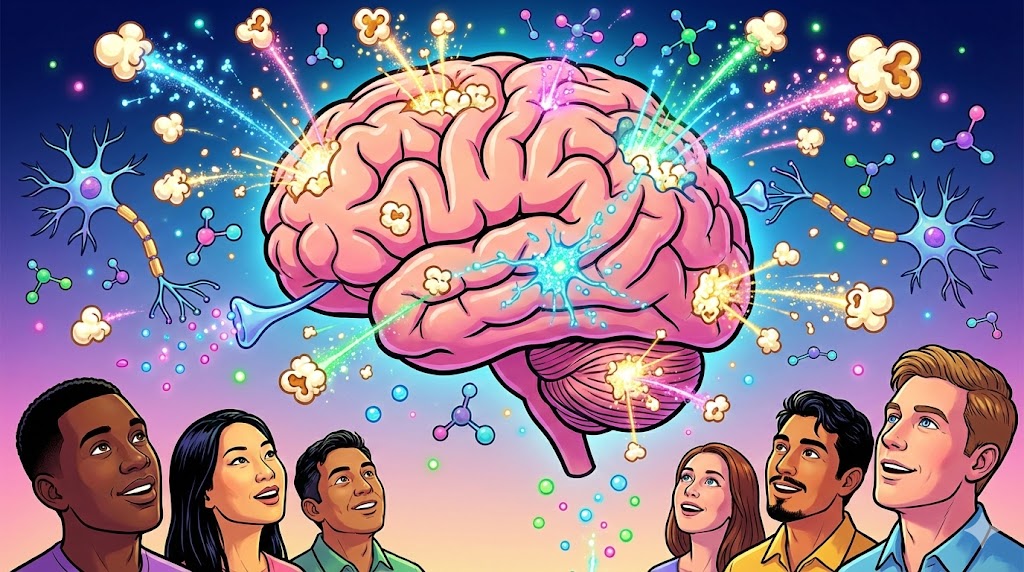
The “Popcorn Brain” Phenomenon
There is a term frequently mentioned in recent psychology columns: ‘Popcorn Brain.’ This describes a state where the brain becomes accustomed to intense, instant stimulation (like popping corn) and becomes unresponsive to the slow, subtle joys of real life—like reading, talking to family, or meditating. If you turn off the TV and suddenly feel an unbearable sense of boredom or anxiety, this is exactly why. Your brain is going through withdrawal.
2. Practical Guide: The 3-Step Screen Time Diet
If you declare, “I’m quitting my phone starting today!”, you will likely fail within 72 hours. (I failed countless times this way.) You need a strategy to reduce it gradually but effectively.
Step 1. Environmental Design (Increase Friction)
Don’t trust your willpower. Trust your environment. As James Clear emphasizes in Atomic Habits, you must make bad habits difficult to do.
- Hide the Remote: Put the TV remote in a drawer, on top of a bookshelf, or somewhere that requires you to physically get up to reach it.
- Bury the Apps: Keep your home screen clean—only calendar, notes, and reading apps allowed. Move YouTube, Netflix, or Instagram into a folder buried three pages deep. Or better yet, delete the apps and force yourself to log in via a web browser every time. (The inconvenience is your friend.)
- No Phones in the Bedroom: This is the game-changer. One hour before bed, plug your phone into a charger in the living room. Buy a traditional alarm clock for your bedside table.
Step 2. Prepare “Replacement Behaviors” (Fill the Vacuum)
If you create a void by turning off the TV but don’t fill it with anything, the silence will drive you back to the screen. You need tasty alternatives.
- Audiobooks/Podcasts: Start by switching from visual stimulation to audio. It gives your eyes a rest while keeping your brain entertained. It’s a great bridge habit.
- Use Your Hands: Lego, coloring books, knitting, or cooking. If your hands are busy, you can’t doomscroll.
- Active “Zoning Out”: Stare out the window for just 5 minutes. It feels awkward at first, but soon you will feel your brain physically decluttering.
Step 3. Use Technology Against Itself
Use the “Digital Wellbeing” or “Screen Time” features built into your phone.
- App Timers: Set a hard limit (e.g., 30 minutes/day) for social media. Pro tip: Ask a friend or partner to set the PIN code so you can’t override it.
- Grayscale Mode: Turn your screen black and white. Without the vibrant colors, the brain receives significantly less stimulation, making the phone boring very quickly.
3. Common Mistakes: Why Do We Keep Failing?
There are common traps that people fall into when attempting a digital detox. Have you made these mistakes?
1. The “All or Nothing” Perfectionism
Rest is essential after work. Don’t try to hit “0 minutes” immediately. The goal is to switch from “Unconscious Scrolling” to “Conscious Viewing.” A strategy like “I will watch exactly one episode of this show and then turn it off” is much more sustainable.
2. Suffering Without Reward
If you tell yourself, “I shouldn’t watch TV, I should be studying,” your brain will rebel. You must replace the screen time with something genuinely enjoyable—like listening to your favorite album, taking a warm bath, or stretching—to maintain the habit.
4. Sustainability Strategy: Investing Your Reclaimed Time
So, you’ve cut down the screen time and found an extra 1–2 hours in your day. How should you use this time to change your life? It doesn’t have to be intense self-improvement.
- Side Projects: Start researching that topic you’ve always been curious about or write a blog post. Take the first step from being a “consumer” to a “creator.”
- Physical Savings Account: Do a quick home workout or take a 30-minute walk outside. Improving your physical stamina actually reduces the urge to look at your phone (which is often a flight response from fatigue).
- Inner Dialogue (Journaling): Try writing down your feelings on paper instead of typing them into a notes app.
According to various psychological studies, a sense of self-efficacy (control over one’s life) drastically boosts self-esteem. The feeling that “I am controlling the media, not the other way around” is the ultimate self-improvement.

5. Conclusion: Your Time is More Valuable than the Algorithm
Those three hours we mindlessly lose every evening add up to 21 hours a week. That’s nearly 100 hours a month. Over a year, that is one and a half months spent just staring at a glowing rectangle.
Right now, try taking the batteries out of your remote. Sit in the quiet living room for just one minute and ask yourself what you really want to do. The moment you turn off the TV, your real life turns on.
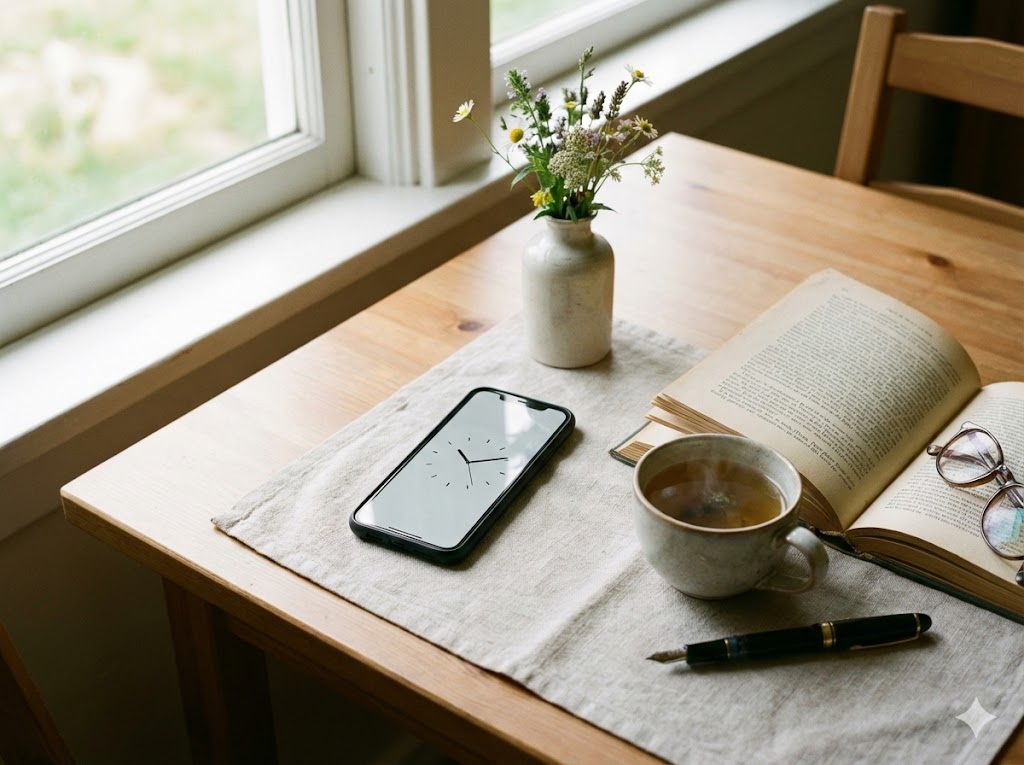
Tonight, instead of your smartphone, why not face yourself with a warm cup of tea?
FAQ: Frequently Asked Questions
Q1. Should I stop watching YouTube for news or study purposes?
A. No, intentional viewing is fine. The danger is “aimless viewing.” Be careful of the “intent trap”—going in for news and getting hijacked by the algorithm for an hour. Search for what you need, watch it, and close the app immediately.
Q2. I’m too tired after work to do anything else.
A. I completely understand. Your brain is exhausted and wants passive rest. However, screens are cognitively demanding. Listening to an audiobook with your eyes closed or taking a 20-minute power nap is far more effective for true brain recovery than scrolling.
Q3. How long does it take to change this habit?
A. According to research from University College London (UCL), it takes an average of 66 days for a new behavior to become automatic. Don’t be discouraged if it doesn’t happen in a week; try to stick with it for at least two months.
Read More (Related Posts)
- [Sleep Health] Your Sleep Quality. [LINK]
[Disclaimer] The content provided in this post is for informational purposes only regarding healthy lifestyle habits and does not substitute for professional medical diagnosis or treatment. If you suspect serious mental health issues such as severe depression, anxiety disorders, or addiction, please consult with a qualified medical professional.