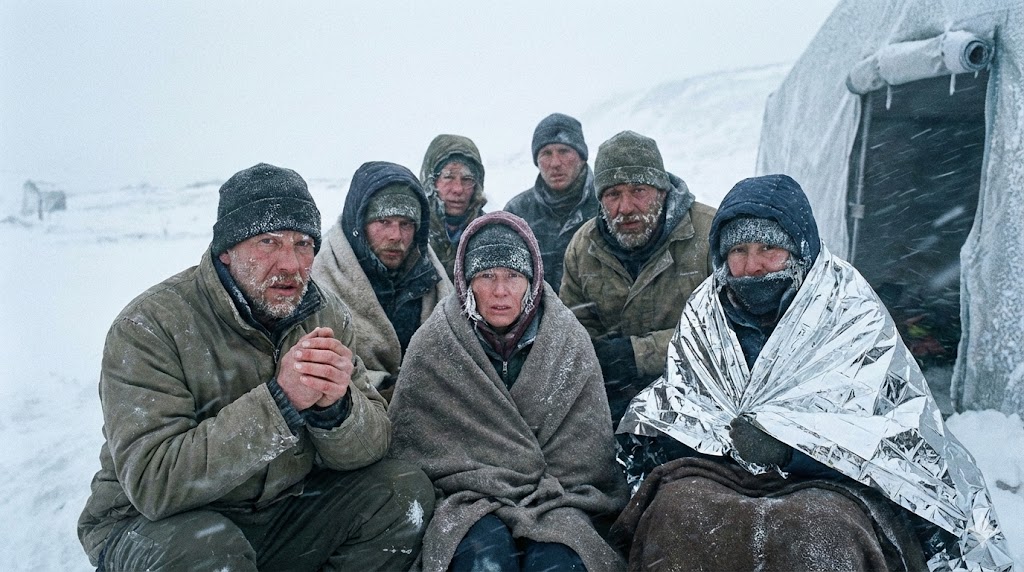
[Key Takeaways] 3-Line Summary for Busy Readers
- When body temperature drops by 1°C, immunity decreases by 30%, and basal metabolic rate falls by 12%, making it easier to gain weight.
- It goes beyond cold hands; it can lead to indigestion, chronic fatigue, and even depression.
- Muscles are your body’s “boiler.” Lower body strength training and drinking warm water are the most effective solutions.
“Everyone else is hot, so why am I freezing?”
Do you find yourself packing a thin cardigan even in the middle of a scorching summer because you’re terrified of air conditioning? Or maybe you’ve had to wear socks to bed because your feet were just too icy to fall asleep?
Actually, I used to be exactly the same. When I went to cafes with friends, they would all order “Iced Americanos,” while I was the only one ordering hot tea, shrugging it off by saying, “I just get cold easily.” But as I dug deeper into health studies, I realized that this wasn’t just a constitution issue—it was a desperate SOS signal my body was sending me.
Today, instead of boring you with dry medical textbook jargon, I’m going to explain in very simple terms why our body temperature drops and what scary things happen inside our bodies when it does.
The Real Reason Your Temperature Drops (It’s Not Just the Weather)
We often think our body temperature drops because the weather is cold. But human beings are ‘homeothermic animals,’ meaning our bodies fight to maintain 36.5°C regardless of the outside temperature. So, if your temperature is plummeting, it means there’s a breach in your internal system.
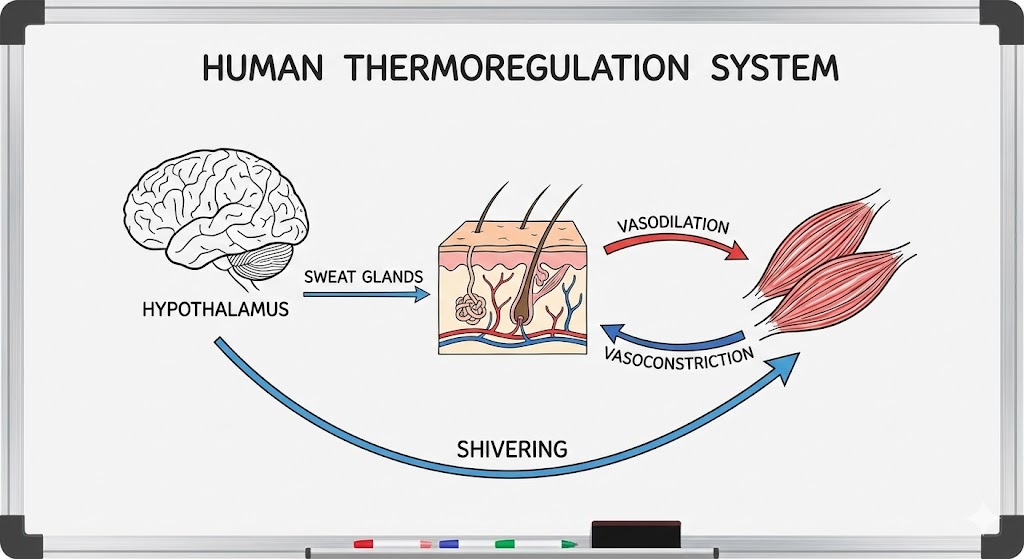
The biggest culprit is usually ‘lack of muscle.’ Muscles are responsible for over 40% of our body’s heat production. A trainer at my gym once gave me a brilliant analogy: “Think of muscle as your body’s boiler. If the boiler has a small capacity, you can’t expect the house (your body) to stay warm.” That really hit home.
Aside from that, a slow metabolism due to hypothyroidism or extreme stress that constricts blood vessels and blocks circulation can also cause your body temperature to nosedive.
Red Flags: Symptoms Stage by Stage
Beyond just “feeling cold,” when your body temperature is low, enzyme reactions in your body slow down, causing problems to topple over like dominoes.
1. Indigestion and Bloating
Do you constantly feel bloated or have gas after eating? Digestive enzymes work most actively at 36.5–37°C. When your temperature drops, gastric motility decreases, and enzyme activity stalls. This is exactly why taking expensive probiotics might not work if your stomach is constantly cold.
2. Immunity on Strike (Frequent Colds, Allergies)
Here is a statistic I found in research papers that truly shocked me. “If body temperature drops by 1°C, immunity decreases by 30%, but if it rises by 1°C, immunity can increase up to 5 times.” When the body is cold, white blood cells lose their energy. They lose the will to fight off invading viruses. If you’re the only one catching a cold every season change, try picking up a thermometer.
3. Unexplained Irritability and Lethargy
This one is surprising, right? Your brain needs the right temperature, too. Low body temperature can affect the secretion of ‘serotonin,’ the happiness hormone. When the body is cold, the balance of the autonomic nervous system is disrupted, making you prone to excessive tension or, conversely, feeling incredibly low and depressed. The expression “cold-hearted” might actually have some scientific basis.
4. Turning into a Body That Won’t Lose Weight
Dieting hard but not seeing results? You need to check your basal metabolic rate (BMR). When body temperature is low, the body tries to accumulate fat for survival rather than burning energy. Since the metabolic process slows down, everything you eat just piles up. It’s an incredibly unfair situation.
‘Raising Temp by 1°C’ Solutions You Can Do at Home
Unless you have a condition requiring medical treatment, fixing your daily habits can bring about significant changes. Here are the methods I’ve personally tried and seen results with.
- Warm Water on an Empty Stomach: This is the absolute basic. It’s the best alarm to wake up your internal organs that cooled down during sleep. Gulping down ice water is like pouring liquid nitrogen into your system—don’t do it.
- Build Thigh Muscles (Squats): About 70% of our body’s muscles are concentrated in the lower body. To increase the “boiler capacity,” you must target the thighs. I made a routine of doing 20 squats every time I brush my teeth. Even after just one month, I could feel my hands and feet getting warmer.
- Half-bath or Foot Bath: This is about forcibly raising your body temperature to open up blood circulation pathways. However, don’t use scalding hot water; 38–40°C (slightly higher than body temp) for about 20 minutes is perfect. You have to experience that refreshing feeling when sweat beads start to form on your forehead.
🚨 Red Flag: Go to the Hospital Immediately!
We must distinguish between simply being “sensitive to cold” and “Hypothermia,” which is a medical emergency.
- If shivering is uncontrollable and then suddenly stops.
- If speech becomes slurred and consciousness becomes cloudy.
- If the skin turns from pale to gray or blue.
These symptoms suggest your core body temperature has dropped below 35°C. This is an emergency. Do not rely on home remedies; call 911 (or your local emergency number) or go to the ER immediately.
Final Thoughts
“Body temperature is the report card of your immunity.”
That is how I like to define it. Starting today, touch your hands and belly once a day. If they feel cold, why not warm them up with a cup of warm tea and some light stretching? That small warmth will become the strongest shield protecting your health.
3. FAQ (Frequently Asked Questions)
- Q: When is the most accurate time to measure body temperature?
A: Measuring “Basal Body Temperature” right after waking up, before moving out of your blankets, is the most accurate. Usually, body temperature is highest between 4 PM and 6 PM and lowest at dawn, so try to measure at the same time each day for comparison. - Q: Does ginger tea really help warm the body?
A: Yes, the ‘Gingerol’ and ‘Shogaol’ components in ginger help blood circulation and dilate peripheral blood vessels, which can help raise body temperature. However, if you have a weak stomach, I recommend drinking it after a meal. - Q: My temperature is in the high 35°C range. Is that normal? A: Medically, 35.5°C to 37.5°C is often considered a normal range, but many modern people have temperatures lower than the ideal 36.5°C. Even if you are in the high 35s, if you feel fatigued or excessively cold, it’s worth making an effort to raise your temperature.
4. Recommended Reading
- [Chronic Fatigue Syndrome] Why you’re tired no matter how much you sleep: Suspect Adrenal Fatigue. [LINK]
5. Disclaimer
“This content is intended for informational purposes regarding health and cannot replace professional medical diagnosis or prescription. Diagnosis and treatment of diseases must be consulted with a specialist. Results may vary depending on individual constitution and condition.”