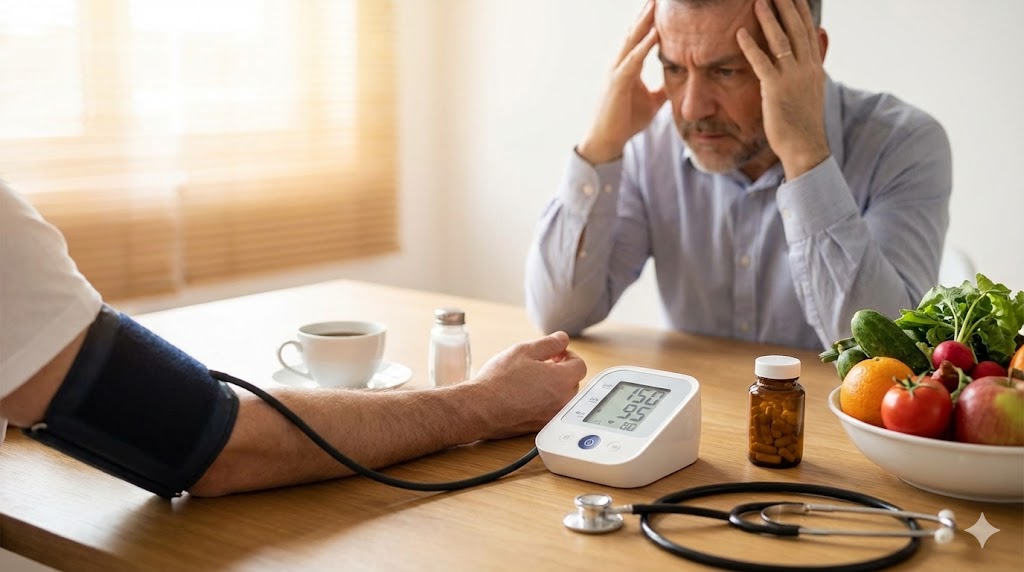
For those who usually manage their blood pressure well, or perhaps had a normal reading at their last check-up, seeing a sudden high number on the monitor can be terrifying. Facing a reading that surges past 150, 160, or even 180 is enough to make anyone panic.
“Is the machine broken?” You might think. You measure it again, but the number remains stubbornly high. Your heart starts pounding, your face feels hot… It’s a genuinely frightening and confusing situation.
But hold on a moment—let’s not panic just yet. Blood pressure isn’t a fixed number; it’s more like waves in the ocean, fluctuating dozens of times throughout the day. A spike could be a temporary event, or it could be a clear signal your body is trying to send.
As a Health Curator, I’m here to walk you through exactly why blood pressure suddenly spikes, breaking down the hidden reasons one by one, and establishing clear criteria for when you absolutely need to see a doctor.
1. The Real Reasons Your Blood Pressure Suddenly Spikes (Analysis of Causes)
Medically, a sudden, significant rise in blood pressure is often referred to as a ‘Blood Pressure Spike.’ This generally occurs when your body’s sympathetic nervous system becomes overly excited or when blood vessels temporarily constrict. Let’s look at the five most common triggers.
① Stress and Anxiety (The ‘Catecholamine’ Culprit)
This is the most common cause. Did you just experience something angering, or were you in a state of extreme tension? When stressed, your body enters “fight or flight” mode, flooding your system with hormones like adrenaline (catecholamines). This causes your heart to beat faster and your blood vessels to narrow, leading to a rapid rise in blood pressure. ‘White Coat Hypertension,’ where blood pressure is only high at the doctor’s office, also falls into this category.
② What We Unknowingly Ate (Dietary Habits)
- The Sodium Bomb: Overeating salty foods increases the osmotic pressure in your blood, pulling in more water. This increases overall blood volume, raising blood pressure.
- Caffeine and Alcohol: Energy drinks, strong coffee, or alcohol consumed the night before can stimulate the central nervous system and drive up blood pressure numbers in a short period.
③ The Hidden Trap: Medication Side Effects
This is an area many people overlook. Did you know that common over-the-counter medications can raise your blood pressure?
- Non-Steroidal Anti-Inflammatory Drugs (NSAIDs): Such as ibuprofen (Advil, Motrin) and naproxen (Aleve).
- Cold Medications (Decongestants): Ingredients designed to clear stuffy noses.
- These medications can cause fluid retention in the body or constrict blood vessels, leading to higher blood pressure.
④ Sudden Acute Pain
If sudden acute pain occurs anywhere in the body (like a herniated disc, toothache, or severe headache), your body naturally responds by raising blood pressure. The pain itself acts as a significant stressor.
⑤ Secondary Hypertension (Underlying Medical Conditions)
If your blood pressure is fluctuating wildly without any of the reasons above, another underlying disease might be hiding. Reduced kidney function, hyperthyroidism, or sleep apnea are common culprits. In these cases, the blood pressure will only stabilize once the root cause is treated.
2. Signals Your Body Sends (Major Symptoms)
When blood pressure rises suddenly, there might not be any obvious symptoms (which is what makes it scary). However, a sharp increase can be accompanied by the following signs. Try a self-check:
- Severe Headache: Especially pain that feels like your head is splitting or stiffness in the back of the neck.
- Vision Changes: Blurred vision or seeing spots before your eyes.
- Chest Pain and Difficulty Breathing: Feeling a tightness in the chest or struggling to catch your breath.
- Dizziness and Facial Flushing: Feeling lightheaded or your face turning red and hot.
- Nosebleeds: Spontaneous nosebleeds that are difficult to stop.
Pause! If you are experiencing two or more of these symptoms along with a high blood pressure reading, it may not be an issue solvable by simple rest.
3. How Is It Diagnosed at the Hospital?
“If my reading is high once, am I now a hypertension patient?” No. Doctors do not diagnose based on a single measurement. When you visit a hospital, you typically go through the following procedures:
- 24-Hour Ambulatory Blood Pressure Monitoring (ABPM): You wear a device that records blood pressure changes throughout an entire day. (This is considered the most accurate method.)
- Blood and Urine Tests: Doctors check kidney function, electrolytes, blood sugar, and cholesterol to look for any ‘secondary causes.’
- Electrocardiogram (ECG/EKG): Checks if high blood pressure has put strain on your heart.
4. Immediate Response and Treatment Guide
If you get a sudden high reading at home, the first step is to ‘stabilize’ before immediately reaching for medication.
Step 1: The 3-Minute Deep Breath and Retest
- Stop what you are doing and sit in a comfortable chair. Keep your back supported and feet flat on the floor.
- Close your eyes and take slow, deep breaths for 5 minutes.
- Measure your blood pressure again. Surprisingly, this process alone often drops the reading by 10–20 mmHg.
Step 2: Remove Lifestyle Triggers
- Avoid coffee or alcohol and drink sufficient water.
- Check any recently taken medications (painkillers, cold meds, etc.) and consult your doctor.
Step 3: Medical Treatment
If lifestyle adjustments don’t solve the issue, or if blood pressure remains chronically high, you may need to take antihypertensive drugs (such as calcium channel blockers, ACE inhibitors, etc.) as prescribed by a doctor. These help widen blood vessels or reduce the burden on the heart.
5. When You Must Go to the Emergency Room
This section is critically important. Major guidelines, including those from the American Heart Association (AHA), define a ‘Hypertensive Crisis’ as follows:
If your blood pressure monitor reads Systolic 180 mmHg or higher OR Diastolic 120 mmHg or higher:
- Rest for 5 minutes and measure again.
- If the reading is still over 180/120, AND…
- You are experiencing symptoms like chest pain, shortness of breath, back pain, numbness/weakness, or slurred speech (stroke signs)…
🚨 Call emergency services (911 in the US) immediately or get to an emergency room. This is a medical emergency that could lead to a stroke or heart attack. Do not drive yourself.
6. Conclusion and Summary
The reasons for a sudden rise in blood pressure vary widely, from simple stress to hidden diseases. The key is distinguishing whether it’s a ‘temporary wave’ or an ‘approaching tsunami.’
- In most cases, it’s likely due to stress, diet, or measurement errors.
- However, if the number exceeds 180/120 and your body feels “off,” do not hesitate to seek medical attention.
Your body is not a machine. It may creak occasionally, but if you listen to the signals instead of ignoring them, you can find your healthy rhythm again. Why not start keeping a ‘blood pressure diary’ with a home monitor today? A small record can be the biggest shield for protecting your health.
❓ Frequently Asked Questions (FAQ)
Q1. How much does drinking coffee raise blood pressure? A. Caffeine can temporarily raise blood pressure by about 10 mmHg. For an accurate reading, it is best to avoid coffee or smoking for at least 30 minutes before measuring.
Q2. Does having a headache necessarily mean I have high blood pressure? A. Not necessarily. High blood pressure is often called the “silent killer” because it frequently has no symptoms. If you measured your blood pressure because you had a headache and found it to be high, it’s also possible that the pain itself (stress from pain) caused the blood pressure to rise.
Q3. Once I start blood pressure medication, do I have to take it forever? A. This is a common misconception. If blood pressure is normalized through weight loss, dietary changes (low-sodium diet), etc., in the early stages, your doctor may decide to reduce or stop the medication. It is only dangerous to stop taking medication on your own without medical advice.
[References & Sources] Based on the latest medical guidelines from 2023-2025.
- Mayo Clinic – High blood pressure (hypertension): Link
- American Heart Association (AHA) – Understanding Blood Pressure Readings: Link
- National Institutes of Health (NIH) – High Blood Pressure: Link
⚠️ Disclaimer: The content of this blog post is for informational purposes only and is not intended to be a substitute for professional medical diagnosis, advice, or treatment. Always seek the advice of your physician or other qualified health provider with any questions you may have regarding a medical condition. If you think you may have a medical emergency, call your doctor or emergency services immediately.