“Why do I keep catching colds lately?”
“I’m losing clumps of hair, and it’s starting to scare me.”
Have you ever found yourself typing these worries into a search bar? You might not be sick enough to go to the ER, but your energy levels are hitting rock bottom. It’s frustrating, isn’t it?
While we often obsess over Vitamin C or Omega-3s, we frequently overlook our body’s “Hidden Guardian”: Zinc ($Zn$).
Zinc is an essential trace mineral, meaning our bodies cannot produce it naturally. But don’t let the word “trace” fool you. It acts as the ammunition for your immune cells, helps build DNA, and heals wounds.
Today, as your health curator, I’m going to walk you through the SOS signals your body sends when it lacks Zinc, and exactly how much you should take to stay safe and healthy.
1. Is Your Body Crying Out for Zinc? (Key Symptoms)
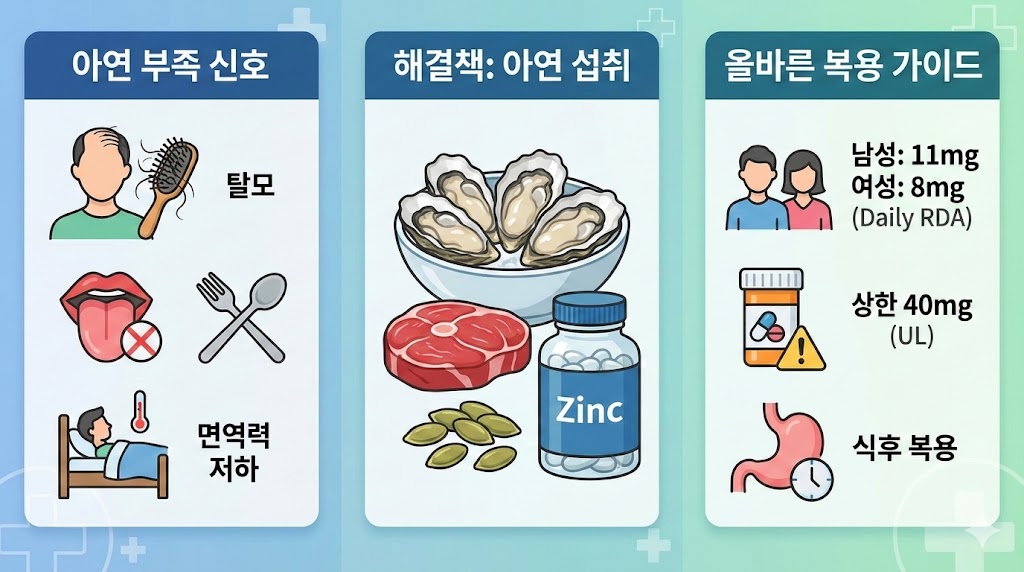
Zinc deficiency often creeps up slowly, wearing many different masks. Based on the latest data from the NIH (National Institutes of Health), here are the most common warning signs.
① “My hair isn’t what it used to be” (Hair Loss & Skin Issues)
The most visible changes happen to your skin and hair. Zinc is crucial for cell division and protein synthesis. When you’re running low, hair follicles weaken, leading to thinning hair or excessive shedding. Also, if your acne won’t go away or you see white spots on your fingernails, it’s time to check your Zinc levels.
② “Food tastes like cardboard” (Loss of Taste & Smell)
This is a baffling symptom. Zinc is required to produce the enzyme responsible for taste and smell. If you’ve lost your appetite or even your favorite meal tastes bland (and it’s not COVID-19), a Zinc deficiency could be the culprit.
③ “I’m always sick” (Low Immunity)
Zinc helps develop T-cells, the soldiers of your immune system. Without enough Zinc, your defense walls crumble, making you susceptible to viruses. You might notice that colds linger forever or that minor cuts and scrapes take an unusually long time to heal.
Editor’s Note: Vegetarians need to be extra careful. Plant-based foods like legumes and whole grains contain ‘Phytates,’ which block Zinc absorption.
2. Science-Backed Benefits of Zinc
So, what happens when you optimize your Zinc levels? Major medical journals from 2023-2025 highlight these key benefits:
- Immune Boosting Powerhouse: Studies show that taking Zinc within 24 hours of the onset of cold symptoms can significantly shorten the duration of the illness.
- Men’s Health Essential: Zinc is found in high concentrations in the prostate. It is vital for maintaining testosterone levels and sperm motility. It’s often called the “ultimate mineral for men” for a reason.
- Blood Sugar Support: Zinc plays a role in the storage and secretion of insulin, potentially aiding in blood sugar management.
3. How Much Should You Take? (The Dosage Guide)
“If it’s good, I should take a lot, right?” Stop right there. Zinc is the classic example of “More is NOT always better.”
✅ Recommended Dietary Allowance (RDA)
According to the NIH guidelines:
- Adult Men: $11mg$ / day
- Adult Women: $8mg$ / day (Pregnancy: $11mg$, Lactation: $12mg$)
- Tolerable Upper Intake Level (UL): $40mg$ per day for adults
Most multivitamins already contain Zinc. If you add a separate supplement, ensure the total amount doesn’t exceed 40mg!
✅ When is the Best Time to Take It?
- The Rule: Zinc absorbs best on an empty stomach.
- The Reality: However, Zinc on an empty stomach causes nausea and stomach upset for many people. If you have a sensitive stomach, I strongly recommend taking it “immediately after lunch.” It’s better to absorb slightly less than to quit taking it because it makes you sick.
✅ Best Pairings vs. Worst Enemies
- (O) Protein: Animal proteins improve Zinc absorption.
- (X) Calcium, Iron, Coffee: Calcium and Iron compete with Zinc for absorption. If you take Iron supplements, take Iron in the morning (empty stomach) and Zinc at night to create a time gap.
4. Warning: Can Zinc Be Toxic? (Side Effects)
Please pay attention to this section (★★★★★). Long-term high-dose intake (over 50mg/day) can backfire.
- Copper Deficiency: Zinc and Copper are like a seesaw. High Zinc pushes Copper out, leading to anemia and neurological issues.
- Lowered Immunity: Ironically, excessive Zinc can actually suppress your immune function.
- Drug Interactions: Zinc can interfere with the absorption of certain antibiotics (Quinolone, Tetracycline). Always tell your doctor if you are taking supplements.
5. How to Choose the Right Supplement
Feeling overwhelmed by the options at the pharmacy? Just remember these two criteria.
① Check the ‘Form’
Flip the bottle and look at the ingredient list.
- Zinc Oxide: Cheap, but poor absorption and hard on the stomach.
- Zinc Gluconate / Picolinate: Good absorption and generally well-tolerated.
- Zinc Bisglycinate (Chelated): Excellent absorption and very gentle on the stomach (often pricier).
If you have a sensitive stomach, go for Gluconate or Bisglycinate.
② Check the Dosage per Pill
Avoid products with 50mg per pill for daily maintenance unless prescribed for a specific deficiency. For a daily routine, 15~30mg is the sweet spot.
6. Conclusion
Zinc is your body’s shield and mechanic. If you feel unexplained fatigue, are losing hair, or catch colds easily, check if your “Zinc Tank” is running on empty.
But remember: Balance is key. It’s not just about filling up; it’s about not overflowing. Why not check your supplement label today and find the dosage that fits you best? This small mineral might be the key to reclaiming your vitality.
💡 Frequently Asked Questions (FAQ)
Q1. Does Zinc really improve male libido?
A. Zinc is essential for testosterone production. If you were deficient, supplementing can help restore healthy levels and function. However, taking extra Zinc when your levels are already normal won’t turn you into Superman.
Q2. Do I need extra Zinc if I’m pregnant?
A. Yes, demands increase during pregnancy for fetal development. It is usually included in prenatal vitamins, but consult your OB-GYN before adding extra supplements.
Q3. Do kids need Zinc supplements?
A. Zinc can help “picky eaters” or children with delayed growth. However, children have a much lower tolerance limit than adults. Always use “Kids’ specific” products and follow a pediatrician’s advice.
[Disclaimer]
The content provided in this article is for informational purposes only and does not constitute medical advice, diagnosis, or treatment. Individual health needs vary. Always seek the advice of your physician or other qualified health provider with any questions you may have regarding a medical condition.
[References & Sources]
This article is based on the latest data from the following authoritative sources:
- National Institutes of Health (NIH) – Zinc Fact Sheet for Health Professionals
👉 https://ods.od.nih.gov/factsheets/Zinc-HealthProfessional/ - Mayo Clinic – Zinc: Supplement interactions and safety
👉 https://www.mayoclinic.org/drugs-supplements-zinc/art-20366112 - Harvard T.H. Chan School of Public Health – The Nutrition Source: Zinc
👉 https://www.hsph.harvard.edu/nutritionsource/zinc/