Unexplained Fatigue and Weight Gain? 7 Signs of Hypothyroidism symptoms & Latest Management Guide
Hello. This is your Health Curator, dedicated to delivering facts and genuine wellness insights.
Have you recently felt like your body is weighed down by wet sandbags? Or perhaps you’ve spent the entire weekend resting, yet the fatigue just won’t lift?
“It’s probably just because work is busy lately…” or “Is this just part of getting older?” We often dismiss these feelings. However, if these changes aren’t temporary and keep repeating—especially if your body feels sluggish despite managing your diet and exercise—your body’s “Metabolic Engine” might be sending a distress signal.
We are talking about Hypothyroidism.
Today, instead of relying on internet rumors, we will dive deep into the core information you need to know, based on the latest guidelines from the National Institutes of Health (NIDDK), the American Thyroid Association (ATA), and the Endocrine Society. I will explain it step-by-step, just like a doctor would in a consultation room.
1. The Thyroid: Our Body’s “Thermostat”
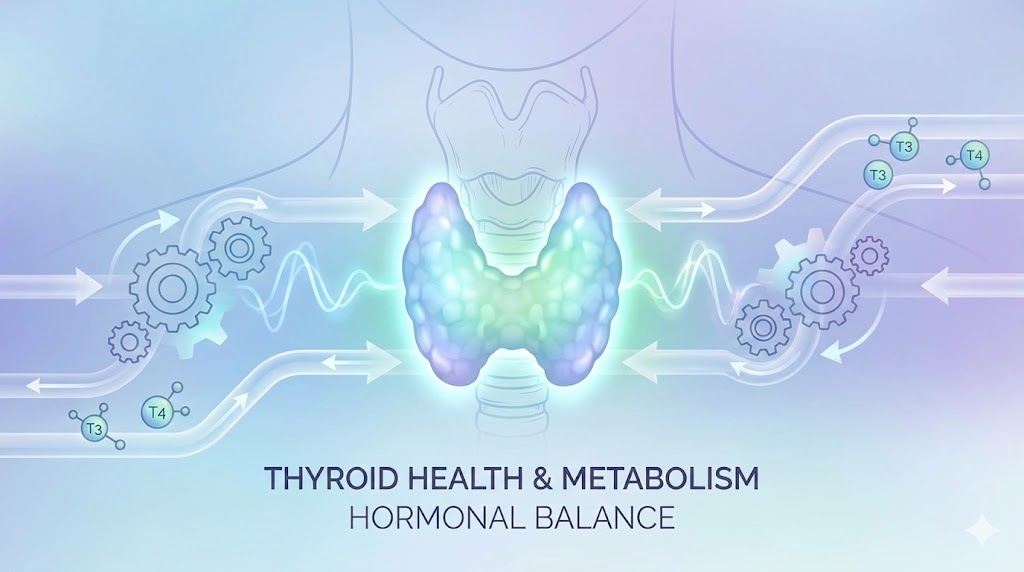
Before checking the symptoms, it helps to understand one key concept. Located at the front of your neck, just below the Adam’s apple, the butterfly-shaped thyroid gland produces hormones that determine the speed of your body’s energy usage.
Think of it as the “Fuel for your Body’s Furnace.”
- Sufficient Hormone: The furnace runs well, so your body temperature is warm, your heart beats strongly, and you are full of energy.
- Insufficient Hormone (Hypothyroidism): It’s like a room where the furnace is dying out. The body gets cold, and every function slows down into “slow motion.”
According to NIDDK statistics, this condition is relatively common. However, because symptoms appear very gradually, many people fail to notice it early, often thinking, “Have I just become lazy?”
2. 7 Warning Signs You Should Not Ignore (Self-Check)
Shall we listen to the signals your body is sending? The following are the most representative clinical signs that appear when thyroid hormones are lacking. While having one or two doesn’t confirm the disease, if multiple symptoms appear together, it is highly recommended to get tested.
① Unfair “Weight Gain”
“I’m eating the same amount as usual.” Even without significant changes in diet or exercise, weight creeps up. This is because Basal Metabolic Rate (BMR) drops due to a lack of thyroid hormones. Your body shifts from burning energy to storing it as fat.
② “Chilled to the Bone” Cold Sensitivity
When others are turning on the air conditioner or saying it’s warm, are you reaching for a cardigan or wearing thick socks? This happens because the body’s ability to generate its own heat (Thermogenesis) has declined.
③ Extreme Chronic Fatigue and Muscle Pain
This is different from simply being sleepy. You might find it hard to get up even after a full night’s sleep, or experience unexplained muscle aches and joint pain. This is because energy is not being delivered to muscle cells efficiently.
④ Rough Skin and Hair Loss
As blood circulation slows, nutrient supply to peripheral tissues like skin and hair decreases. Your skin may become noticeably dry and rough, and your hair may become thinner or fall out more than usual when brushing.
⑤ Unresolved Constipation
Bowel movements are also affected by metabolism. As the gut moves more slowly, you may experience chronic constipation that doesn’t resolve even with probiotics or fiber.
⑥ Brain Fog and Memory Decline
“It feels like there’s a fog inside my head.” You might experience difficulty concentrating, forget things you just heard, or feel unexplained depression. Brain cells also require thyroid hormones to function properly.
⑦ For Women: Menstrual Changes
Irregular cycles or a sudden increase in menstrual flow (menorrhagia) can be observed. Since this can also be a cause of infertility, checking your thyroid levels is essential if you are planning pregnancy.
3. Diagnosis: How to Read Your Blood Test Results
When you go to the hospital for a blood test, knowing the basic principles will help you understand your results without panic.
Basic Test: TSH and Free T4
- TSH (Thyroid Stimulating Hormone): The signal the Pituitary Gland (The Boss) sends to the Thyroid (The Employee) saying, “Get to work!”
- Free T4: The actual hormone (The Output) produced by the Thyroid.
[Typical Pattern] In most cases of hypothyroidism, TSH is High (↑) and Free T4 is Low (↓). Because the employee (Thyroid) isn’t working, the boss (Pituitary) has to yell louder (High TSH). However, individual variations exist, so interpretation by a specialist is necessary.
Key Additional Test: Antibody Test (Anti-TPO, Anti-Tg)
It is important to understand not just “that” function has dropped, but “why.” If these antibodies are positive, it suggests an autoimmune condition like Hashimoto’s Thyroiditis. It means your immune system is attacking your thyroid.
“My numbers are vaguely high?” (Subclinical Hypothyroidism)
This refers to cases where TSH is high, but T4 is normal. This is often a gray area regarding treatment, but the latest trends are:
- TSH ≥ 10 mIU/L: Most guidelines recommend treatment.
- TSH 4~10 mIU/L: Rather than automatically medicating, the trend is a personalized approach considering symptoms, age, pregnancy plans, antibody presence, and cardiovascular risk.
4. Treatment and Management: The Golden Rules of Medication
The standard treatment for hypothyroidism is taking Levothyroxine. Think of this less as a chemical drug and more as a “Hormone Supplement” replacing what your body lacks.
① How is the dose determined?
It depends on the patient’s age, weight, and heart health. For young, healthy adults, starting at approximately 1.6 μg per kg of body weight is a common reference point, but individual adjustment is mandatory.
② Follow-up is Crucial
Starting the medication isn’t the end. You need to recheck blood work 6 to 8 weeks after starting to see if TSH levels have reached the target range and micro-adjust the dose. Once stable, checks are usually done every 6 to 12 months.
③ Rules to Maximize Absorption
This medication is very finicky about absorption. It is highly recommended to follow these rules:
- Take on an empty stomach in the morning with water.
- Wait at least 30 to 60 minutes before eating breakfast.
- Iron supplements, Calcium supplements, and Antacids interfere with absorption, so spacing them out by at least 4 hours is recommended.
5. Pregnancy and Thyroid: Stricter Management Needed
For those pregnant or planning pregnancy, thyroid hormone is directly linked to the fetal brain and neural development, making management critical.
- Lower Targets: The ATA and other guidelines recommend maintaining TSH levels lower than the general population during the first trimester.
- Dose Increase: Once pregnancy is confirmed, hormone requirements can skyrocket. Therefore, if you see two lines on a pregnancy test, contact your doctor immediately. It is common to need a dose increase (often by 20-50%).
6. Lifestyle and Nutritional Tips
“Is there anything I can do besides taking medicine?” Of course.
Nutrition: Selenium and Zinc
These are minerals involved in thyroid hormone metabolism. Getting adequate amounts through a balanced diet, or foods like Brazil nuts (1-2 per day) or oysters/meat, can be helpful.
“Can I eat Broccoli?” (Cruciferous Vegetables)
You may have heard that cabbage or broccoli can hinder thyroid function. Experts generally state: “If eaten in normal amounts and cooked, there is no need to worry.” However, extreme cases like juicing large amounts of raw cruciferous vegetables daily should be avoided. If you are unsure, consult your doctor.
Closing Thoughts
Although hypothyroidism may require lifelong management, with proper treatment, you can live a healthy life without limitations on your daily activities.
Don’t blame yourself, thinking, “Why am I so sluggish lately?” It is not a lack of willpower. Noticing your body’s signals and seeking professional help is the beginning of true wellness.
I hope this guide serves as a small compass to help you reclaim your vibrant mornings.
💡 Pre-Visit Checklist Discuss with your doctor if you need the following tests:
- Basic: TSH, Free T4
- Cause Analysis: Anti-TPO (Antibody test), Anti-Tg
- Optional: Free T3, Lipid Panel (Cholesterol), Inform them if you take Biotin
⚠️ This article is written based on reliable medical information but cannot substitute for professional medical diagnosis or prescription. Health issues vary by individual, so please consult a specialist for decision-making.
Frequently Asked Questions (FAQ)
Q1. Do I have to take thyroid medication for the rest of my life? In cases where thyroid function is permanently reduced, such as Hashimoto’s thyroiditis, long-term medication is often necessary. However, conditions like temporary thyroiditis after childbirth may resolve naturally, allowing you to stop medication, so regular check-ups are essential.
Q2. I’m taking the medicine, but I’m not losing weight. Even if hormone levels normalize, it takes time for your slowed metabolism to recover (resetting the ‘Set Point’). combining consistent medication with strength training can help gradually improve this.
Q3. Is taking medication safe for the baby during pregnancy? Yes, it is not only safe but essential. If the mother lacks the hormone, it can affect fetal development, so you must take it regularly as prescribed by your doctor.
Q4. Should I eat a lot of Seaweed or Iodine? Most people (especially in countries with iodized salt) already consume sufficient iodine. In fact, excessive iodine intake can worsen thyroid inflammation in some autoimmune conditions. Balanced consumption is key rather than “loading up” on supplements.
Q5. When will the hair loss improve? Once levels stabilize, hair loss usually stops and regrows. However, due to the natural hair growth cycle, it may take several months after starting treatment to see visible improvements, so patience is required.
References
- NIDDK (National Institute of Diabetes and Digestive and Kidney Diseases): Hypothyroidism Information (2021).
- American Thyroid Association (ATA): 2017 Guidelines for the Diagnosis and Management of Thyroid Disease during Pregnancy and Postpartum.
- Chiovato L, et al. Treatment of Subclinical Hypothyroidism. Endocrine Reviews (2019).
- Jonklaas J, et al. Guidelines for the Treatment of Hypothyroidism. Thyroid (2014).